


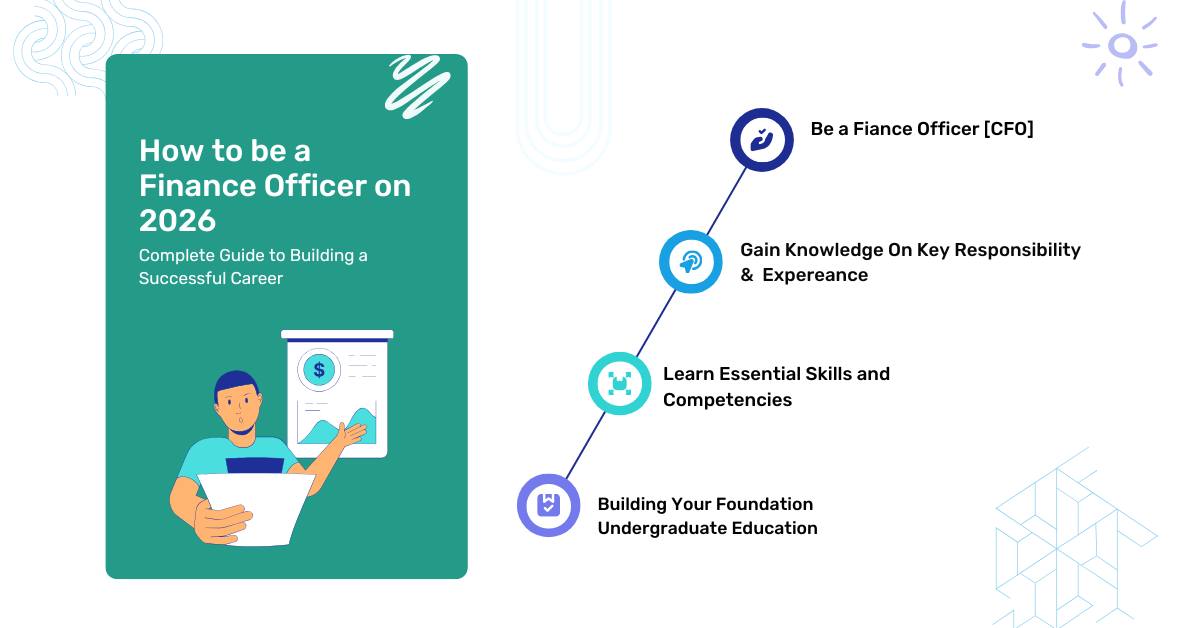
If you’re wondering how to be a finance officer in Nepal’s rapidly evolving financial sector, you’ve come to the right place. The path to becoming a finance officer requires a strategic combination of proper education, relevant skills, practical experience, and professional dedication. This comprehensive guide will walk you through every step needed to launch and advance your career as a finance officer.
Understanding the Finance Officer Role
Before diving into how to be a finance officer, it’s essential to understand what this profession entails. Finance officers serve as the financial backbone of organizations, managing monetary resources, ensuring regulatory compliance, and providing strategic financial guidance. In Nepal’s competitive business environment, these professionals play a critical role in determining organizational success through effective fund management and financial planning.
The demand for qualified finance officers continues to grow across various sectors, including banking, corporate organizations, non-governmental organizations (NGOs), international agencies, and government institutions. However, this increased demand comes with heightened competition, making proper preparation absolutely crucial.
Educational Qualifications: Building Your Foundation
Undergraduate Education
The journey of how to be a finance officer begins with obtaining the right educational credentials. In Nepal, a Bachelor’s degree serves as the minimum entry requirement, though higher qualifications significantly enhance your career prospects.
Recommended undergraduate programs include:
- Bachelor in Business Administration (BBA) – Offers comprehensive business knowledge with finance specialization options
- Bachelor in Business Studies (BBS) – Provides fundamental business and accounting principles
- Bachelor’s in Business Management (BBM) – Focuses on management skills alongside financial concepts
- Bachelor’s in Accounting – Delivers specialized accounting and financial management training
- Bachelor’s in Economics – Provides a strong analytical and economic theory foundation
To pursue these degrees, candidates must first complete their Plus Two education, preferably in the Management or Science stream. Most universities, including Tribhuvan University (TU), conduct entrance examinations that assess candidates’ aptitude for business studies.
Postgraduate Studies
While understanding how to be a finance officer starts with undergraduate education, advancing in this career increasingly requires postgraduate qualifications. The competitive landscape in Nepal’s financial sector has made Master’s degrees nearly essential for securing managerial positions and higher salaries.
Popular postgraduate options:
- Master of Business Studies (MBS) – Offers advanced business and finance knowledge
- Master of Business Administration (MBA) – Provides comprehensive management training with a finance concentration
- Master’s in Finance or Accounting – Delivers specialized expertise in financial management
Completing a Master’s degree not only deepens your knowledge of financial management, budgeting, accounting principles, and strategic finance but also demonstrates commitment to professional excellence—a quality highly valued by employers.
Essential Skills and Competencies
Knowing how to be a finance officer extends far beyond academic credentials. Modern finance professionals must possess a diverse skill set combining technical abilities, analytical thinking, and interpersonal competencies.

Technical Proficiency
Computer and Software Skills: Financial operations in Nepal have become increasingly digitized, making technological competency non-negotiable. Finance officers must demonstrate:
- Advanced Microsoft Excel proficiency – Including pivot tables, VLOOKUP functions, macros, and complex financial modeling
- Accounting software expertise – Familiarity with platforms like Tally, QuickBooks, SAP, or Oracle Financial Services
- Financial analytics tools – Understanding of data visualization and reporting software
- Enterprise Resource Planning (ERP) systems – Experience with integrated business management software
Analytical and Critical Thinking
Finance officers must possess strong analytical capabilities to interpret financial data, identify trends, forecast outcomes, and make informed recommendations. Critical thinking becomes particularly valuable when organizations face financial challenges, unprofitable periods, or market uncertainties. The ability to creatively problem-solve and develop innovative financial strategies distinguishes exceptional finance officers from average ones.
Communication Skills
Advanced fluency in English, both written and verbal, stands as a fundamental requirement for finance officers in Nepal. You’ll regularly communicate with management teams, board members, shareholders, auditors, and government officials. The capacity to explain complex financial concepts in accessible terms, present reports clearly, and negotiate effectively directly impacts your career advancement.
Capacity Building and Leadership
Experienced finance officers often take on mentoring roles, training both finance and non-finance staff on budgeting processes, financial reporting, and compliance requirements. Leadership skills enable you to manage finance teams, coordinate cross-departmental activities, and drive organizational financial performance.
Gaining Relevant Experience
Understanding how to be a finance officer includes recognizing that practical experience holds equal importance to academic qualifications. Entry-level positions provide invaluable exposure to real-world financial operations and help build the expertise necessary for advancement.
Entry-Level Opportunities
Recent graduates should pursue positions such as:
- Accounts Assistant – Handles basic bookkeeping and transaction recording
- Finance Associate – Supports budgeting and financial reporting activities
- Junior Accountant – Manages specific accounting functions under supervision
- Financial Analyst Trainee – Assists with data analysis and report preparation
These roles typically require 0-2 years of experience and provide foundational knowledge of organizational financial systems, reporting cycles, and compliance requirements.
Mid-Level Progression
After gaining 2-3 years of experience, professionals can advance to positions like:
- Senior Accountant – Oversees complex accounting functions and supervises junior staff
- Financial Analyst – Conducts detailed financial analysis and forecasting
- Budget Officer – Manages organizational budgeting processes
- Accounts Supervisor – Coordinates accounting department activities
Senior-Level Positions
Senior roles such as Finance Manager typically require a minimum of 3-5 years of extensive managerial experience in finance and accounting. Many organizations, particularly international NGOs and multinational corporations operating in Nepal, also prefer candidates with experience in specific sectors such as non-profit organizations or development agencies.
Important note: Most employers require that applicants possess the permanent right to employment in Nepal, meaning proper work authorization documentation is essential.
Key Responsibilities of Finance Officers
To fully grasp how to be a finance officer, you must understand the comprehensive responsibilities these professionals shoulder within organizations.
Budget Planning and Management
Finance officers oversee the entire budgeting cycle, including:
- Developing annual budget forecasts based on organizational goals and historical data
- Allocating funds to various cost centers and departments
- Monitoring expenditure patterns to ensure budget compliance
- Revising budgets in response to changing circumstances
- Analyzing variances between budgeted and actual spending
Financial Reporting and Compliance
Ensuring accurate, timely financial reporting stands as a cornerstone responsibility:
- Maintaining up-to-date accounting systems with all transactions properly recorded
- Preparing monthly, quarterly, and annual financial statements
- Reconciling bank accounts, ledgers, and subsidiary accounts
- Generating financial reports for management, boards, and external stakeholders
- Ensuring compliance with Nepalese accounting standards and tax regulations
Tax Management
Finance officers handle all tax-related obligations:
- Preparing accurate tax declarations (income tax, VAT, TDS, etc.)
- Ensuring timely submission of tax returns to government authorities
- Making correct tax payments within prescribed deadlines
- Maintaining documentation for tax audits
- Staying updated on changes to Nepal’s tax laws and regulations
Internal Controls and Audit Management
Robust internal controls protect organizational assets and ensure financial integrity:
- Developing and implementing internal control mechanisms
- Conducting internal audits to identify weaknesses or irregularities
- Managing external audit processes, including tendering for audit services
- Coordinating with external auditors during annual audits
- Implementing audit recommendations to strengthen financial systems
Strategic Financial Advisory
Senior finance officers serve as trusted advisors to organizational leadership:
- Providing financial analysis to support strategic decision-making
- Advising on investment opportunities and risk management
- Recommending cost-reduction measures and efficiency improvements
- Developing strategies for profit maximization
- Identifying and pursuing new funding sources
Funding and Resource Mobilization
Particularly in non-profit and development sectors, finance officers may:
- Develop external relationships with potential donors and funding agencies
- Coordinate fundraising activities
- Manage grant applications and reporting requirements
- Handle Initial Public Offerings (IPO) and Further Public Offerings (FPO) for companies entering capital markets
Human Resource Support
In some organizations, especially smaller entities, finance officers assume HR-related responsibilities:
- Processing payroll and managing employee compensation
- Elaborating job descriptions for finance positions
- Managing employment contracts
- Conducting staff performance appraisals
- Ensuring compliance with labor laws and government regulations regarding staff welfare
Professional Certifications and Continuous Development
While exploring how to be a finance officer, don’t overlook the value of professional certifications that enhance credibility and expertise.
Relevant Certifications
Though not always mandatory in Nepal, pursuing recognized certifications significantly boosts career prospects:
- Chartered Accountant (CA) – Offered by the Institute of Chartered Accountants of Nepal (ICAN)
- Certified Public Accountant (CPA) – International certification demonstrating accounting expertise
- Chartered Financial Analyst (CFA) – Globally recognized credential for financial analysis and investment management
- Certified Management Accountant (CMA) – Focuses on management accounting and strategic financial management
Continuous Learning
The financial landscape evolves constantly with new regulations, technologies, and best practices. Successful finance officers commit to ongoing professional development through:
- Attending workshops and seminars on financial management and accounting updates
- Participating in training programs offered by professional bodies
- Staying informed about changes in Nepal’s financial regulations and tax laws
- Reading financial publications and industry reports
- Networking with other finance professionals through professional associations
Career Growth and Salary Expectations
Understanding how to be a finance officer also means having realistic expectations about career progression and compensation.
Career Trajectory
A typical career path might progress as:
Years 0-2: Entry-level positions (Accounts Assistant, Junior Accountant) – Building foundational skills Years 3-5: Mid-level roles (Senior Accountant, Financial Analyst) – Developing specialization and management capabilities Years 6-10: Senior positions (Finance Manager, Finance Controller) – Leading finance functions and teams Years 10+: Executive roles (Chief Financial Officer, Finance Director) – Strategic leadership and organizational governance
Salary Ranges in Nepal
While salaries vary significantly based on organization type, location, experience, and qualifications, finance officers in Nepal can expect:
- Entry-level: NPR 20,000-40,000 per month
- Mid-level: NPR 40,000-80,000 per month
- Senior-level: NPR 80,000- 200,000+ per month
- Executive-level: NPR 200,000+ per month plus benefits
International organizations, banks, and large corporations typically offer higher compensation packages than local organizations or small businesses.
Challenges and How to Overcome Them
As you learn how to be a finance officer, prepare for challenges you’ll likely encounter:
Intense Competition
Challenge: Nepal’s finance sector attracts many qualified candidates, making positions highly competitive.
Solution: Differentiate yourself through specialized certifications, strong computer skills, and a proven track record. Building a robust professional network also opens doors to opportunities.
Rapidly Changing Regulations
Challenge: Tax laws, accounting standards, and financial regulations frequently change in Nepal.
Solution: Subscribe to updates from regulatory bodies, join professional associations, and participate in continuing education programs focused on compliance.
Technology Adaptation
Challenge: Financial technology continues evolving, requiring constant learning.
Solution: Proactively learn new software and tools, take online courses in financial technology, and embrace automation as an opportunity rather than a threat.
Pressure and Deadlines
Challenge: Finance officers work under significant pressure, especially during reporting periods, audits, and tax filing deadlines.
Solution: Develop strong organizational skills, practice stress management techniques, and implement systems that distribute workload evenly throughout the year.
Practical Steps to Start Your Journey
Now that you understand how to be a finance officer, here are actionable steps to begin your career:
Step 1: Complete your Plus Two education with good grades, preferably in the Management or Science stream.
Step 2: Prepare for and pass university entrance examinations for business programs.
Step 3: Enroll in a Bachelor’s degree program (BBA, BBS, BBM, or Accounting).
Step 4: During your undergraduate studies, develop strong Excel skills and learn at least one accounting software.
Step 5: Seek internships or part-time positions in finance departments to gain practical experience.
Step 6: Upon graduation, apply for entry-level finance positions to build professional experience.
Step 7: Consider pursuing a Master’s degree (MBS or MBA) after 1-2 years of work experience.
Step 8: Pursue relevant professional certifications (CA, CPA, CFA, or CMA) to enhance credentials.
Step 9: Continuously update your skills, especially in technology and current financial regulations.
Step 10: Network actively with finance professionals through professional associations and industry events.
Note: You can use Flow to manage your daily routine.
Conclusion
Learning how to be a finance officer in Nepal requires dedication, strategic planning, and continuous improvement. The profession offers rewarding career opportunities for those willing to invest in proper education, develop essential skills, and gain relevant experience. While the competitive landscape presents challenges, qualified professionals with strong technical abilities, critical thinking skills, and up-to-date knowledge of financial technologies and regulations will find abundant opportunities across various sectors.
Remember that becoming a successful finance officer isn’t just about meeting minimum qualifications—it’s about exceeding expectations through excellence in financial management, maintaining ethical standards, and contributing strategically to organizational success. The financial sector in Nepal continues to expand, creating promising prospects for talented individuals who approach this career path with professionalism and commitment.
Whether you’re just starting your Plus Two education or already working in an entry-level finance position, following this guide on how to be a finance officer will help you navigate your career journey successfully. Stay focused on your goals, remain adaptable to industry changes, and never stop learning—these principles will serve you well throughout your finance career in Nepal.
Watch Video :